




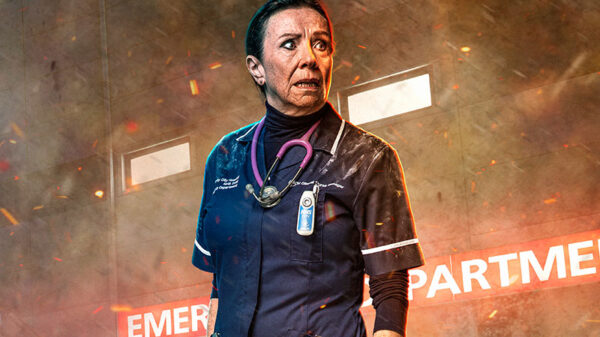


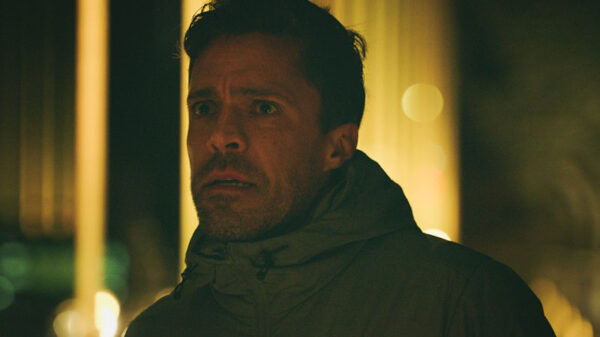
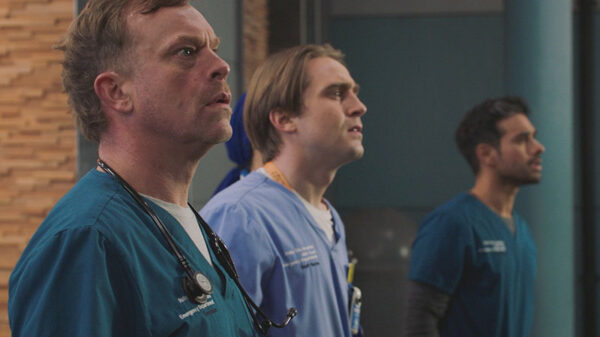


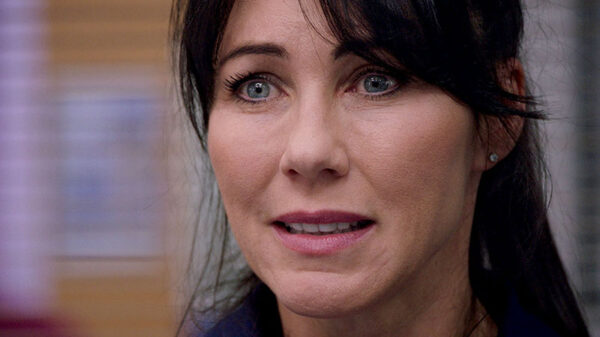

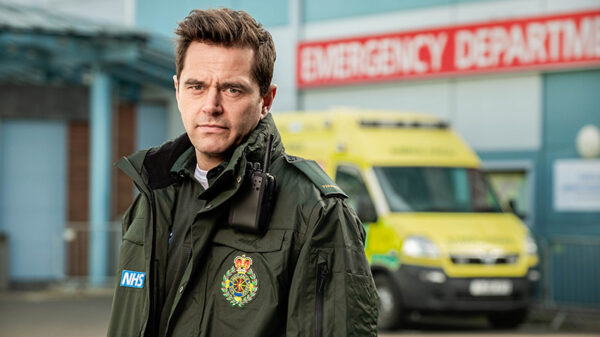





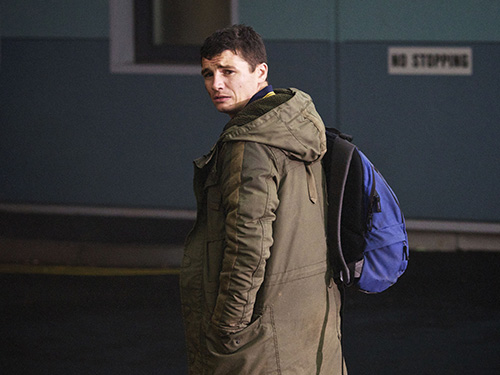




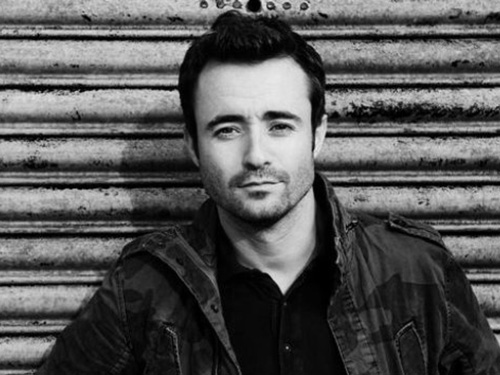






























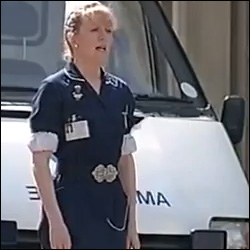

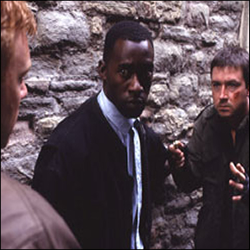


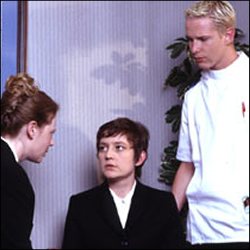


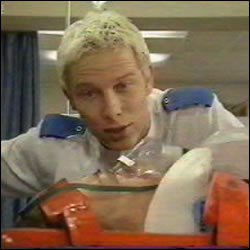


























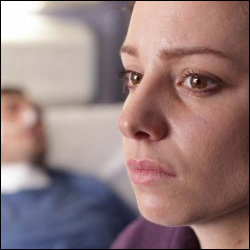

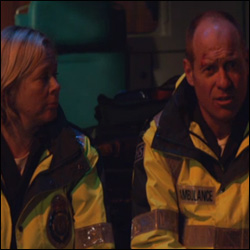

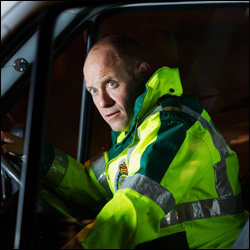
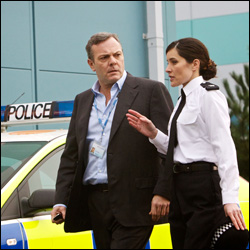


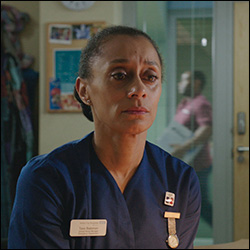


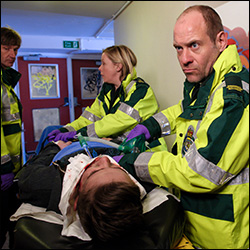

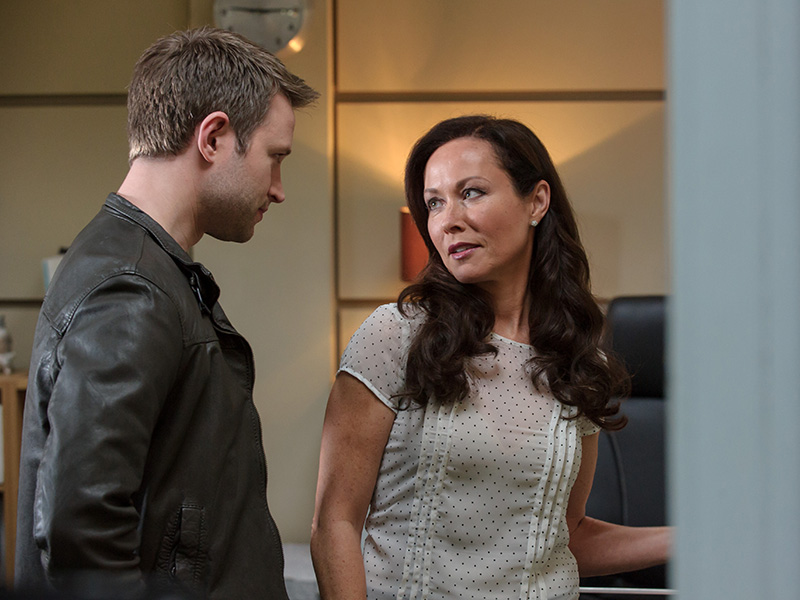


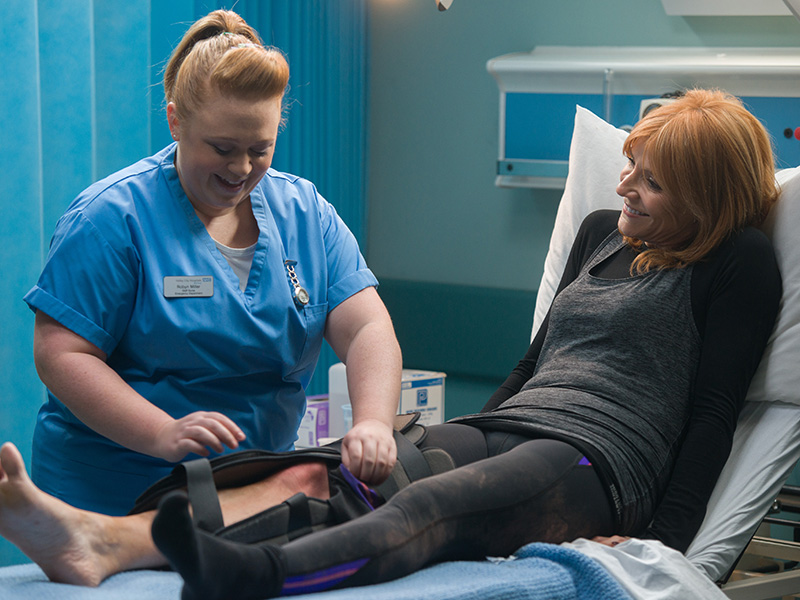








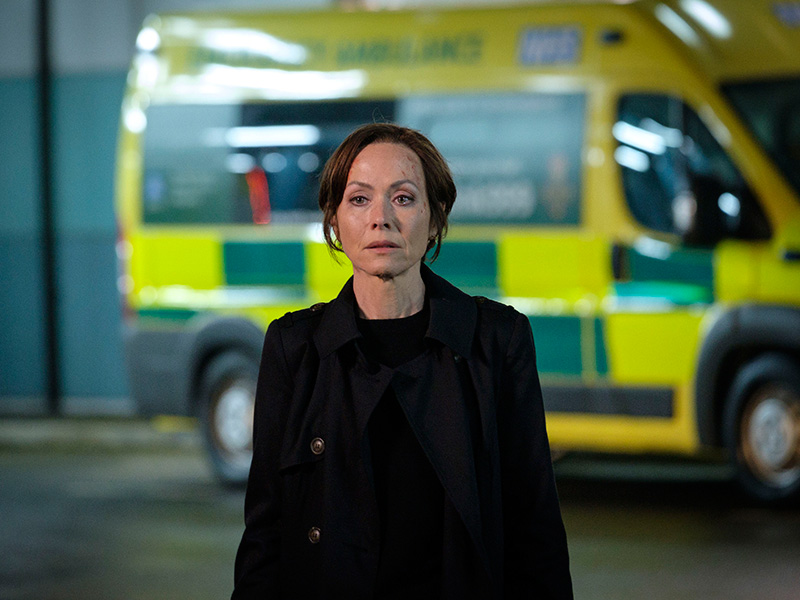
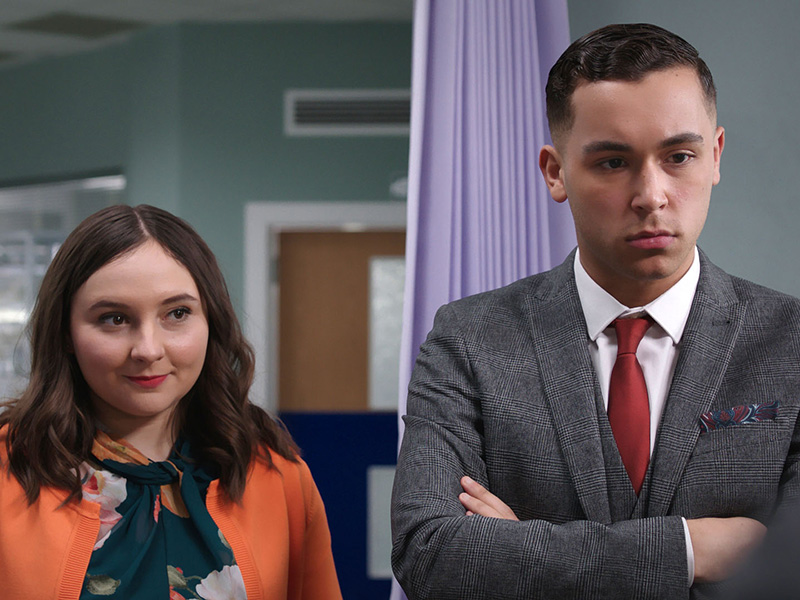
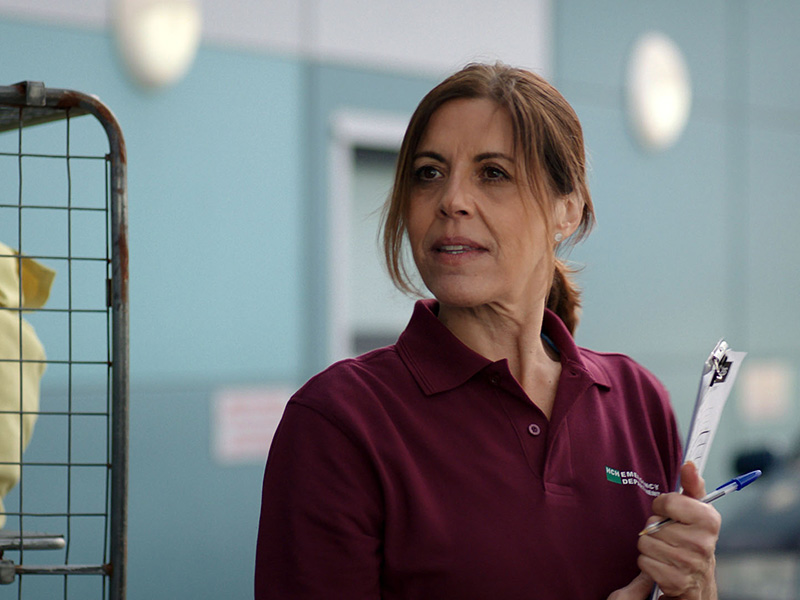

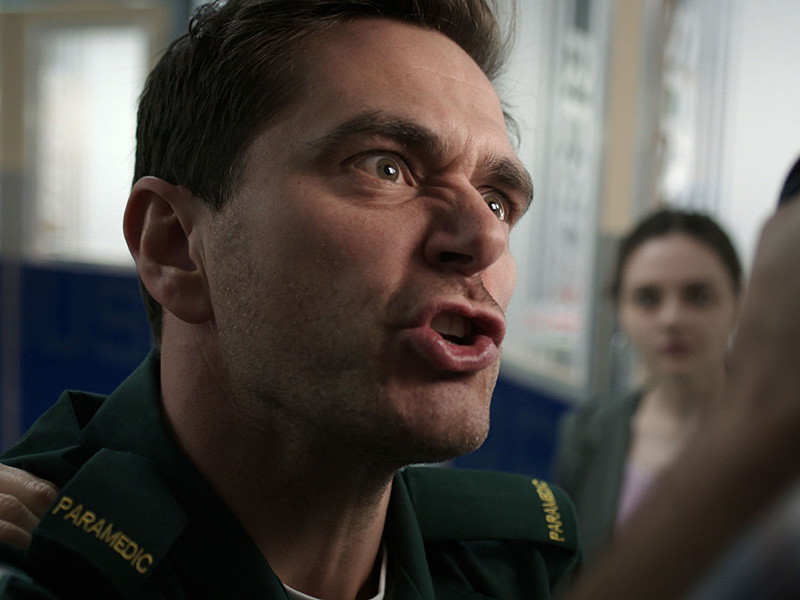
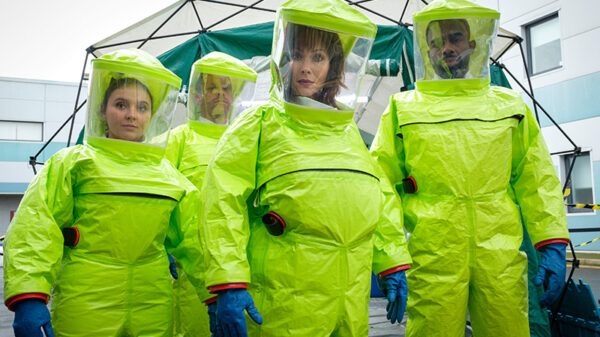
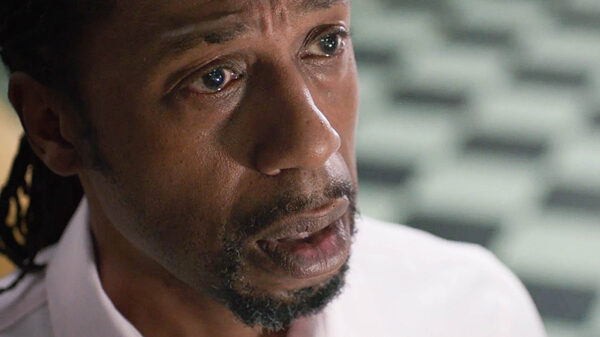

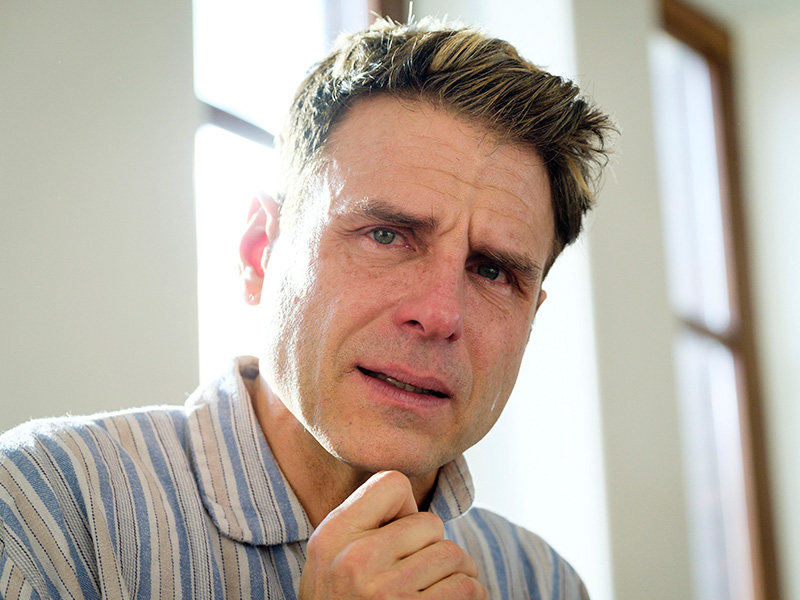





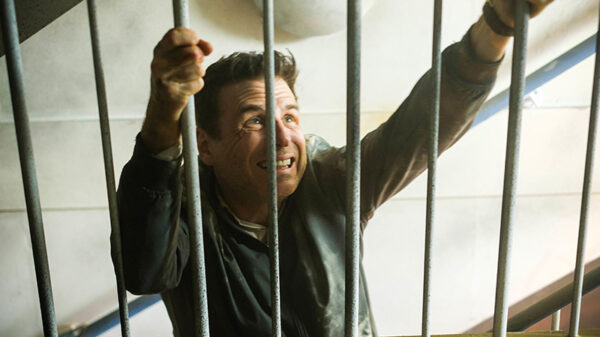











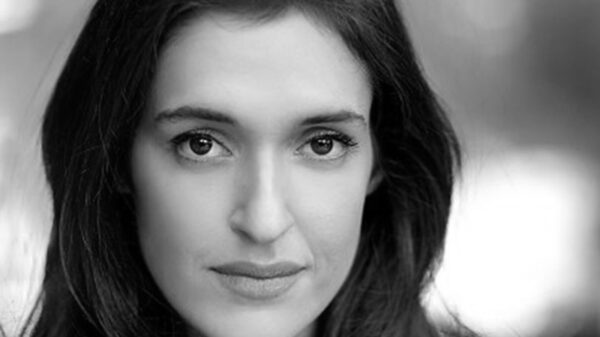









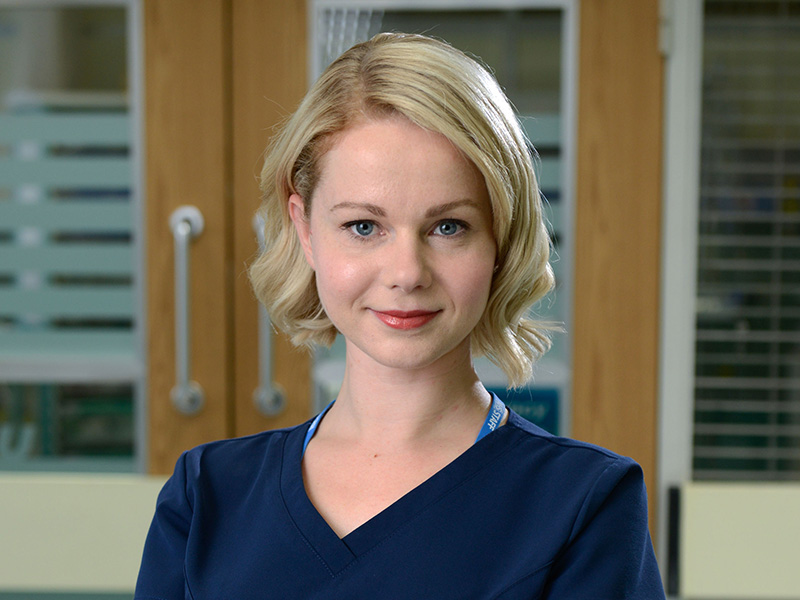

















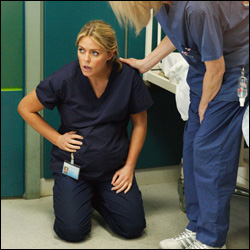












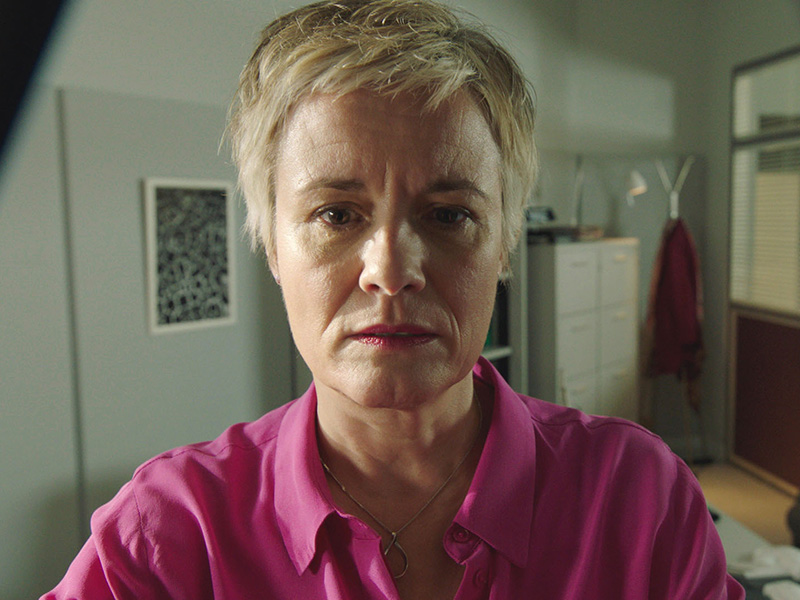
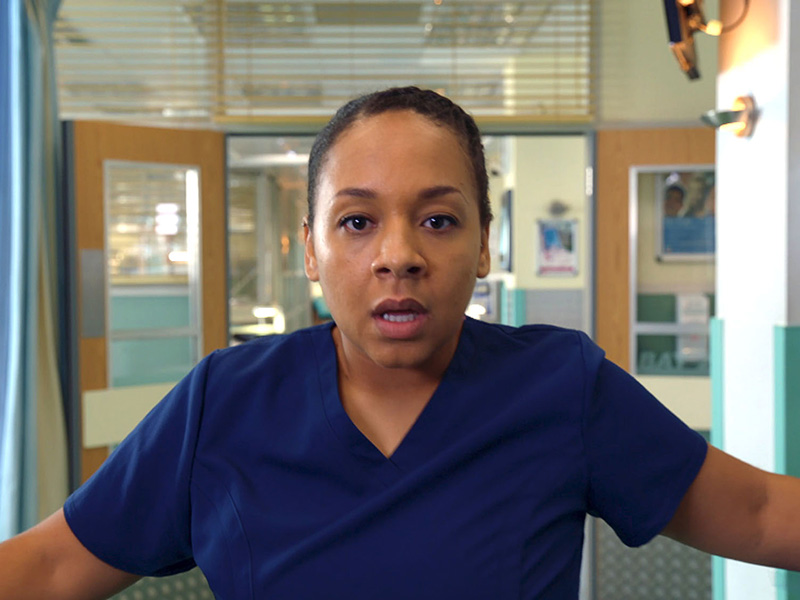







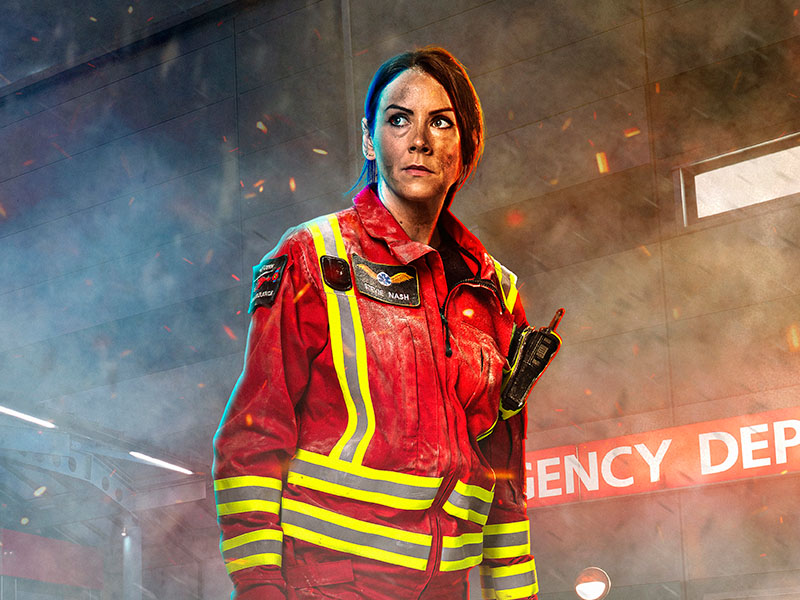
Ahead of CASUALTY’s 40th Anniversary episodes, Elinor Lawless (Stevie) discusses what’s coming up ..
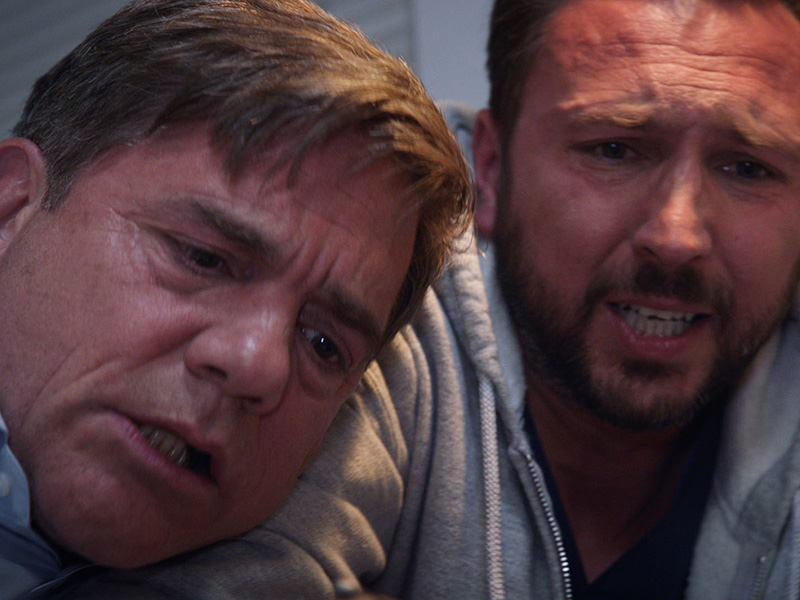
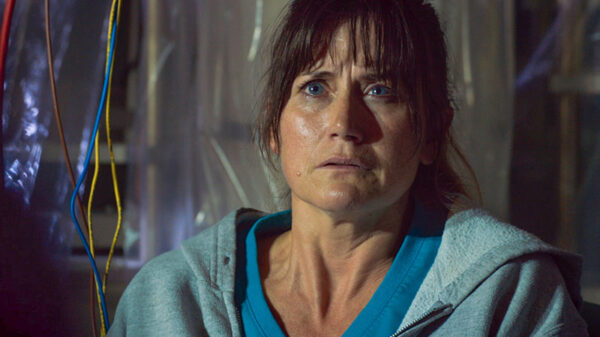
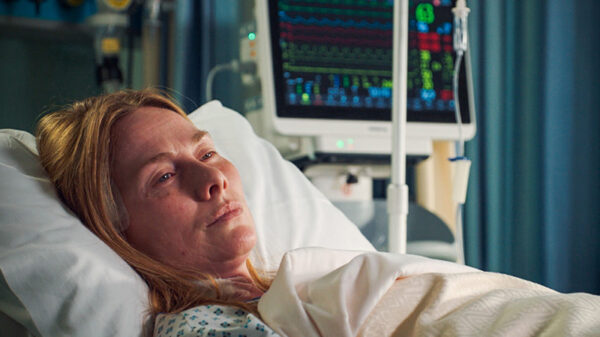
Stevie and Flynn find themselves trapped underwater in an ambulance. What was your first reaction when you discovered what Stevie would have to endure?
Because Steve Hughes was directing it, and Michelle Lipton and Toby Walton had written the scripts, I instantly knew there was going to be a huge sense of claustrophobia in the episodes. Steve’s film knowledge is unbelievable, and his references for the anniversary were films like Jaws and The Abyss. I knew it was going to be a bit of a heartstopper.
How physically and emotionally demanding was filming the quarry and underwater sequences when the ambulance submerges?
It was incredibly demanding. But as an actor, there’s a huge excitement around that because you know it’s going to be hard work. You want it to be hard work, because then you’re creating something that’s worth it.
I’m not somebody who naturally takes to water. If I’m thrown into water or into the deep end of a pool, my instinct is to breathe in. So, I had to retrain my whole body to be in a survival mode. The team at Pinewood were absolutely phenomenal. When the producers came and said this is what we’re going to have to do, my instinct is never “no, I can’t”, my instinct is “then I must”. By the time we got onto set and started filming, I felt really comfortable and relaxed, which, for me, is a miracle.
When filming the sequence where the water is rising and reaches a critical point, you imagine yourself in that situation. You’re faced with something you can’t fight, so it wasn’t hard to go there mentally. I think those situations are something every audience member can grab onto and identify with.
At the heart of the story is Stevie placing her life in Flynn’s hands. What interested you about exploring that level of trust between the characters?
For Stevie, the idea of handing her survival over to anybody other than herself is very difficult. She has to hand herself over to Flynn because she injures herself and the odds go down for her very quickly.
All the things that Stevie has previously been through, she always thinks, “I can do this, I can do that.” But this episode is all about her letting go and handing herself over to whatever will be, the fates. It’s the first time ever that Stevie says she’s scared, because she has to hand herself over to circumstances that she would normally kick against.
Stevie is usually incredibly capable and self-reliant. What happens when she’s forced to surrender control?
It’s a part of Stevie that I love playing because I am not as stubborn as her. I will accept help from others, and I will ask for help. It puts her in a very childlike place, and in a way, it’s quite easy to go there as an actress because it’s something that’s very relatable.
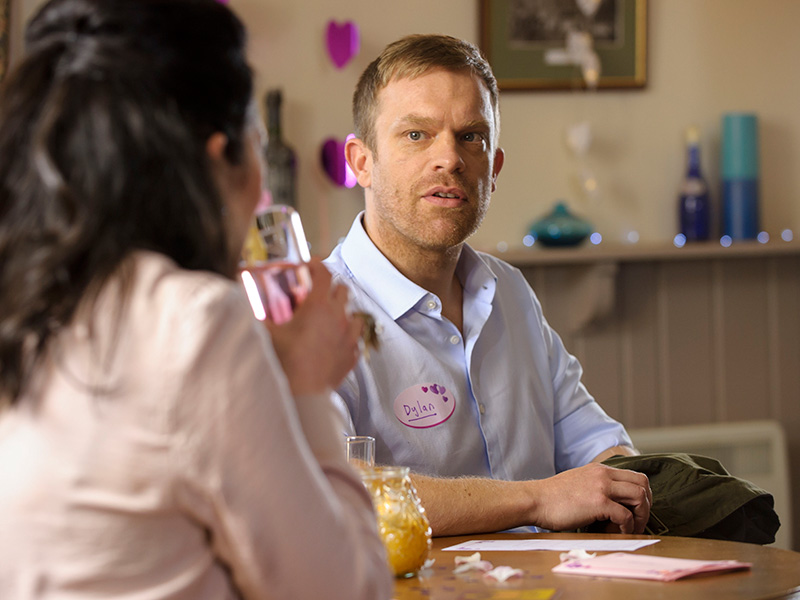
The friendship between Stevie and Dylan has become one of the show’s defining relationships. What do these episodes reveal about their bond?
That it’s unbreakable. What I love about it is that some people need it to be a friendship, some people need it to be a relationship, but Stevie and Dylan recognise that there’s a meeting of minds. These characters are two sides of one coin. What it demonstrates is that they have a respect for one another. They’re also both quite stubborn, they take their job incredibly seriously and they really care about what they do. That bond between them is one of the threads that runs through those episodes.
What has the show given you personally that you’re most grateful for?
It gave me a great job, and I have learned so much. I came into the show incredibly green. I’d only ever really done theatre. When I first arrived, there was such a lovely camaraderie among the cast and crew, and it gave me a sense of place and a sense of belonging. People sharing the same space, all working towards the same thing.
Art and entertainment at its best comes from that common language of people really caring about creating something. That never stops being a joy. A challenge, but a joy.
Why do you think audiences continue to see themselves reflected in Holby ED?
Because the characters are human and fallible. Audiences don’t just want to watch stories about superheroes, they want to watch stories about superheroes that are flawed. They want to see people who are messy, imperfect and complicated. I think the reason audiences continue to connect with it is because, watching these characters, they’re reminded that it’s ok to be human, and that the aim is not to be super-human.